Country learning lab
Learn Luxembourg: one name, country and capital
Separate Luxembourg the country from its capital, locate its three neighbours and compare its flag with the Netherlands.
Try the recall exerciseLuxembourg: your starting facts
Start with the place
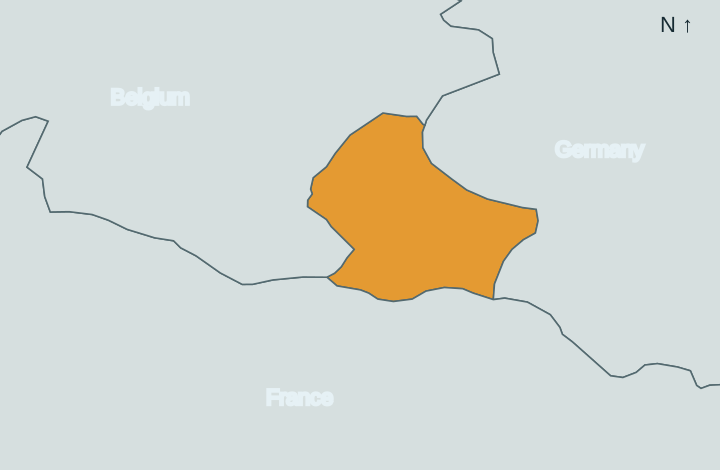
Luxembourg highlighted between Belgium to the west and north, Germany to the east and France to the south. Simplified boundaries; use the labels as learning anchors.
Look closely at the flag
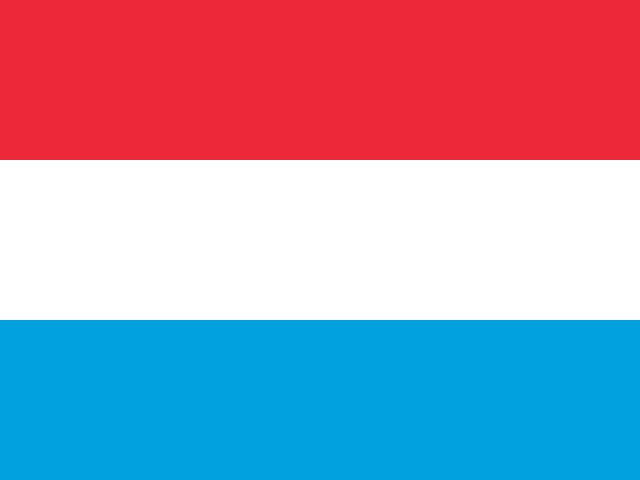
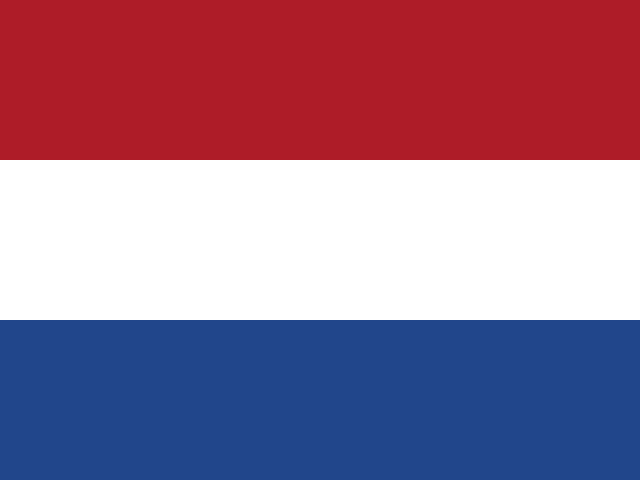
Luxembourg and the Netherlands both use red, white and blue horizontal bands. The Luxembourg flag uses a lighter blue. Compare the two illustrations side by side; screen colour alone is less reliable than a labelled reference.
Give the same name two different roles
Luxembourg can name the country or its capital. Write two labels rather than treating that as a trick: country—Luxembourg; capital—Luxembourg City. When someone asks where a place is, check whether they mean the state or the city. That distinction is especially helpful when the same name appears in a question, a transport listing or a country-capital table.
For location, build a three-neighbour frame around the country. Belgium is to the west and north, Germany to the east and France to the south. The map is simplified, but these relationships provide a useful starting cue. Sketch the three surrounding names around a small centre box labelled Luxembourg. Your sketch is a memory aid, not a scale map. Check the actual outline before putting the reference away.
Use a role-and-neighbour card: country on one line, capital on the next, then Belgium/Germany/France around the edge. Explain the lighter-blue flag stripe aloud after comparing it with the Dutch flag.
- Write the country name and capital on separate lines, even though the names overlap.
- Sketch the three-neighbour frame. Cover the reference and name the neighbour to the south.
- Compare the two flags, then answer the recall questions. Check again later without the flag labels.
Look → cover → recall
Try 3 questions about Luxembourg
Move away from the reference and type your answers. Capitalisation, accents and extra spaces are ignored. You can reveal an answer if you are unsure; revealed answers do not earn a recall point.
Questions to practise without a screen
- What is the capital of Luxembourg?
- Which country borders Luxembourg to the south?
- What colour is the bottom stripe of Luxembourg’s flag?
Reveal answers and explanations
- The capital is Luxembourg, commonly called Luxembourg City to distinguish it from the country.
- France is south of Luxembourg; Belgium lies west and north, and Germany east.
- The bottom stripe is light blue. The other bands are red and white.
Cover the answers before you begin. Say or write each response, then open the key to check it. A successful attempt immediately after reading is a start; return after a break to see what you remember. The score here describes only these questions.
References and scope
Facts checked against the references on 2026-09-22. The map is simplified and the flag artwork uses a 4:3 display format. The country-specific lesson and answers are maintained as structured content; a shared template assembles the page.
Keep learning with GeoCapitals
Practise capitals, flags and map challenges, then explore country Atlas cards in GeoCapitals for iPhone and iPad. Limited starter access is included; most quiz modes and the full Atlas require optional Pro.
Continue practicing in the app